
Description
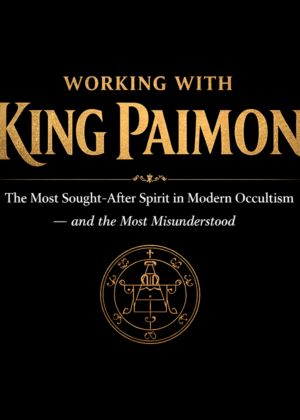
Working with King Paimon Guide — The Complete Practitioner’s Guide
He commands 200 legions. He teaches all arts and sciences. He will not lie. He is the most sought-after spirit in modern occultism — and most practitioners who approach him get it wrong from the very first call.
This 38-page guide is the most thorough King Paimon resource available in digital format. It draws on the traditional Ars Goetia source texts, the accumulated knowledge of serious practitioners, and a genuine respect for what Paimon actually is — not the horror film caricature, not the vague social media mythology, but the sovereign intelligence described in the Lemegeton and documented across centuries of serious working accounts.
What’s inside — all 9 chapters
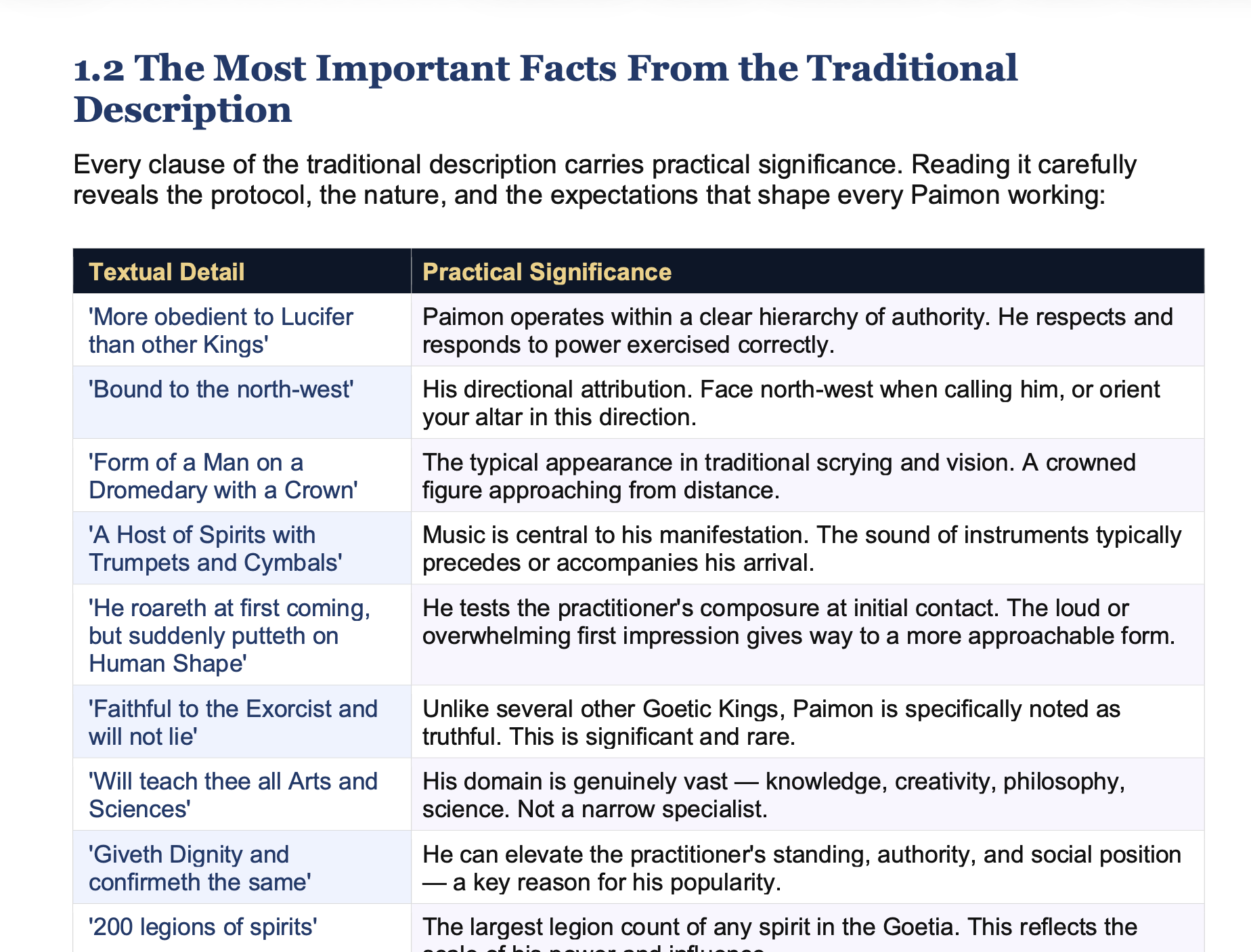
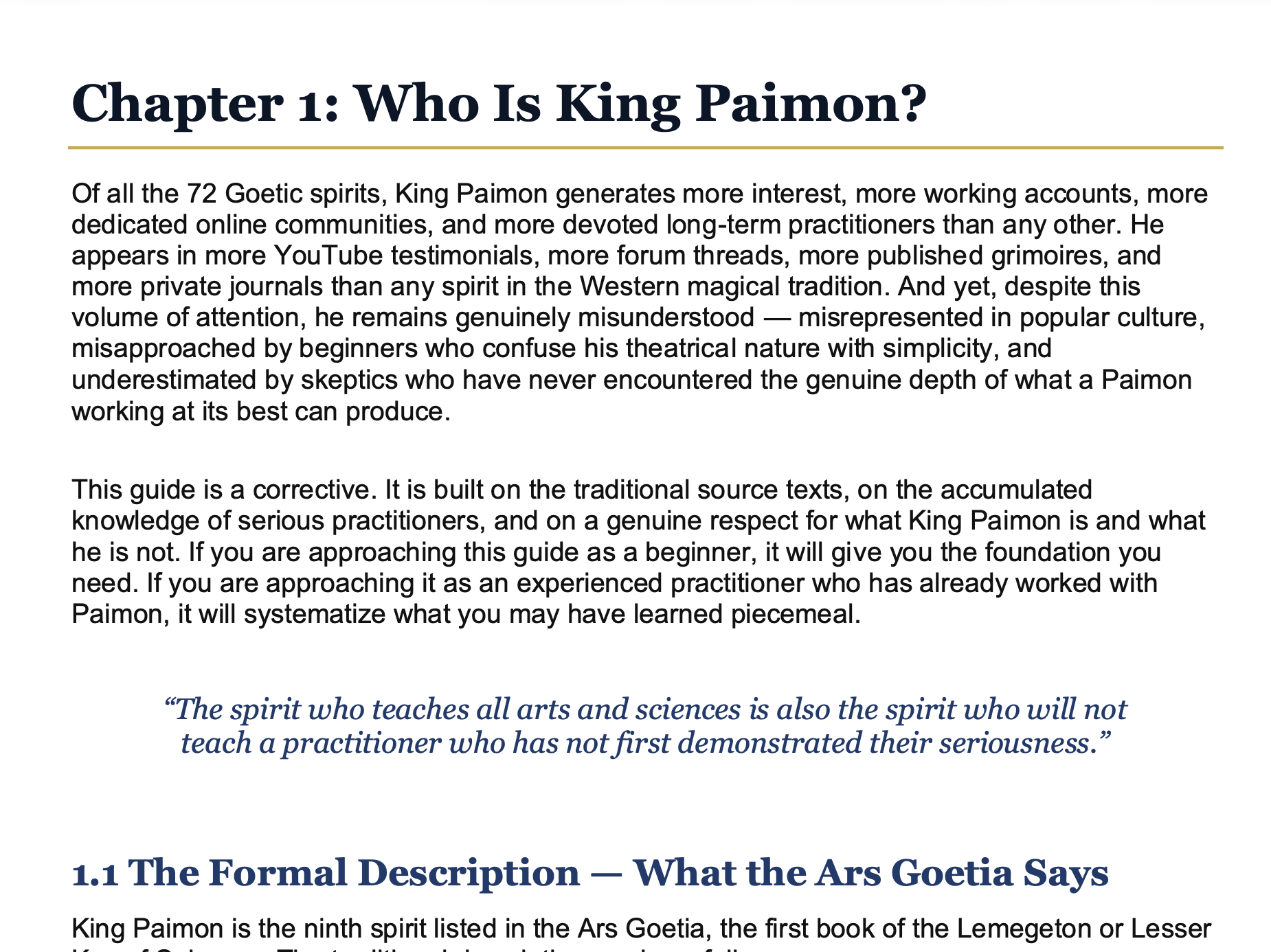
- Who is King Paimon. The complete traditional description parsed clause by clause — what each line of the Ars Goetia text means in practical terms. His pre-Goetic roots in the Pseudomonarchia Daemonum, possible Arabian and ancient Near Eastern antecedents, and his position in modern occultism. Includes a direct note on the Hereditary film misrepresentation.
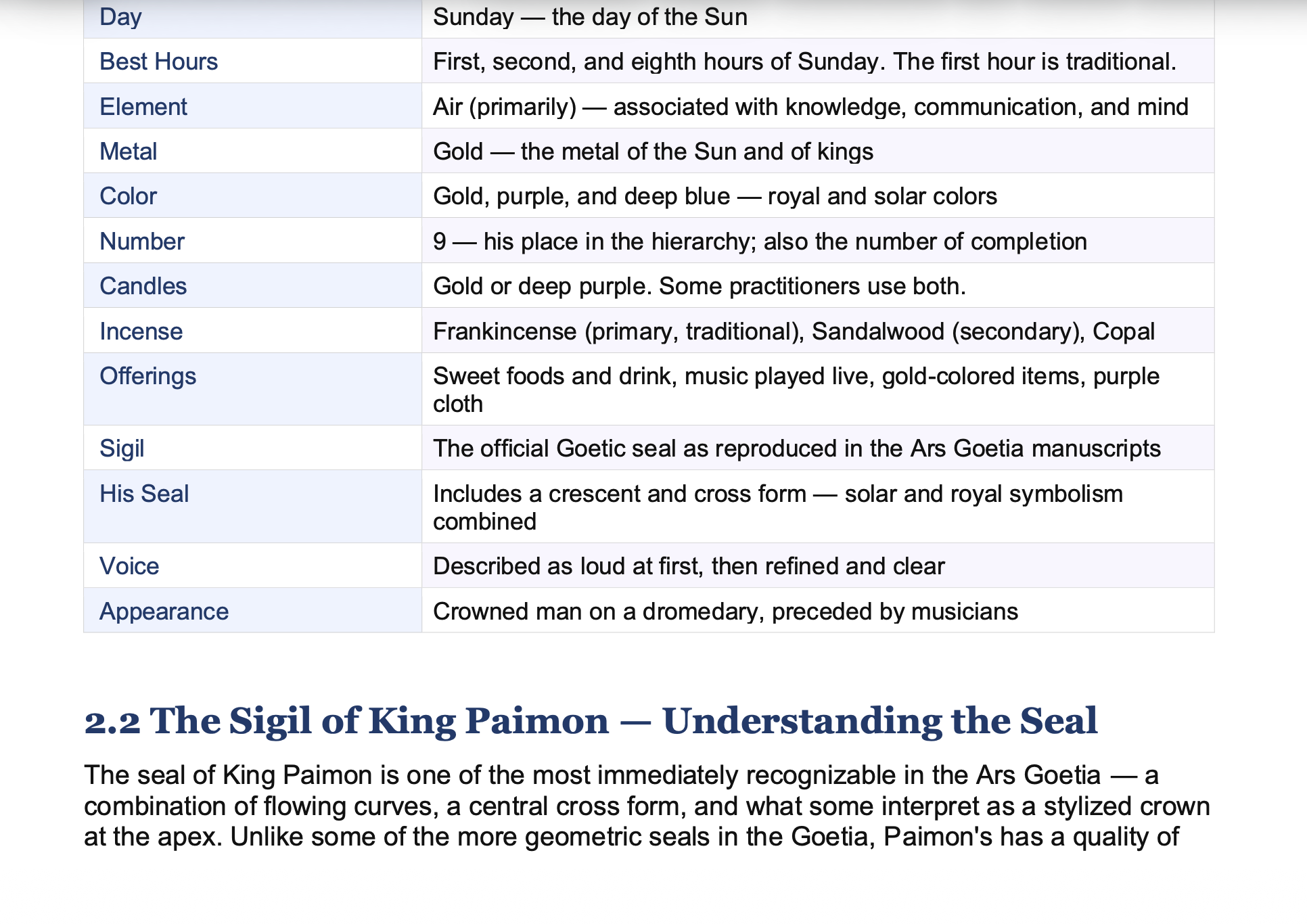
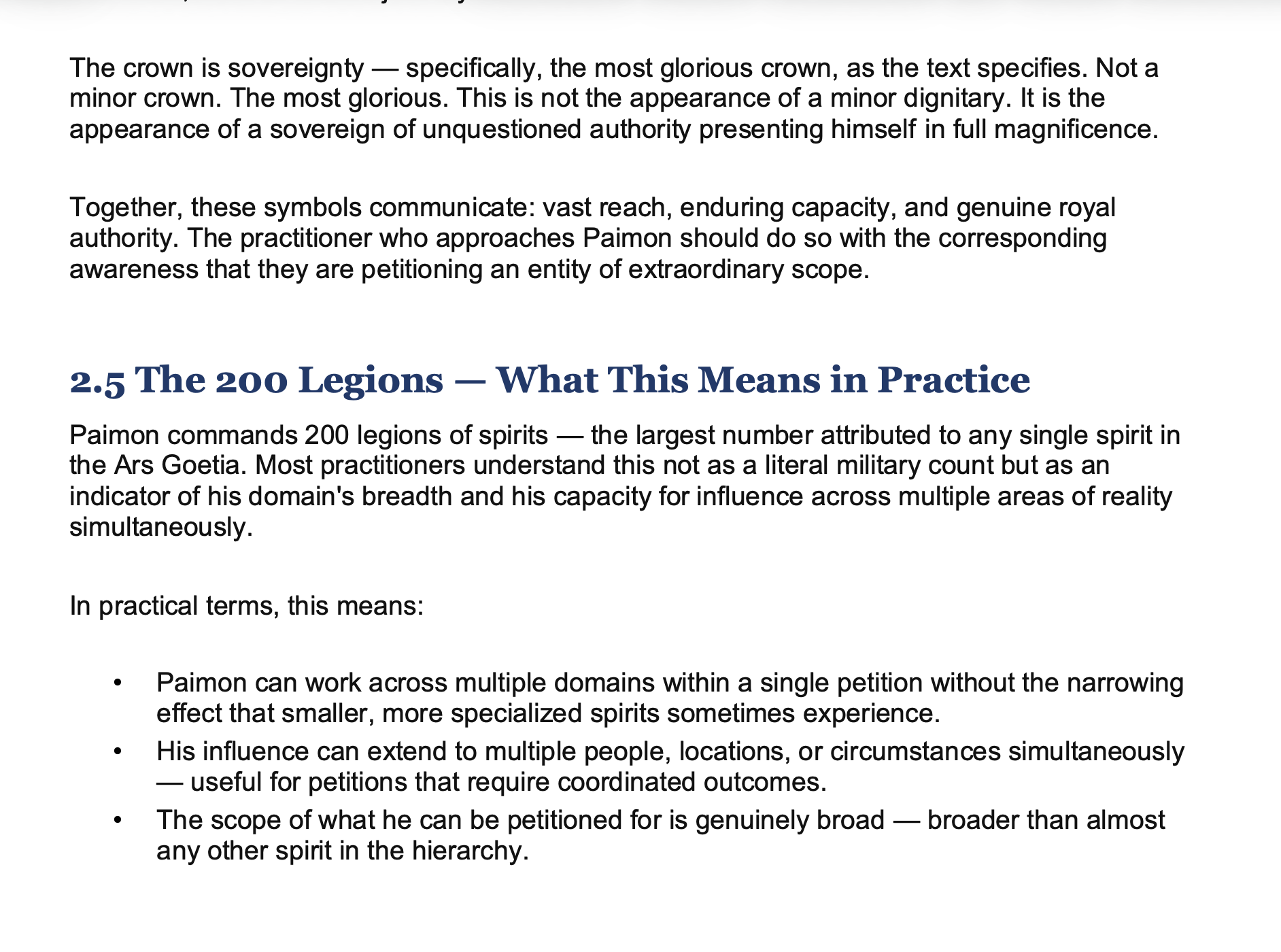
- Attributes and correspondences. Complete correspondence table covering rank, legions, direction, planet, day, optimal hours, element, metal, colors, candles, incense, offerings, and sigil. Deep notes on the seal, the dromedary and crown symbolism, the musical attribute explained fully, and what commanding 200 legions means in practical working terms.
- Paimon’s specialties — what to ask for. Knowledge and revealed secrets, academic and intellectual mastery, philosophical understanding, music and sound, visual arts, writing and language, performance and public presence, personal dignity and authority, professional advancement, influence over specific individuals (with complete ethical framework), and the teaching relationship.
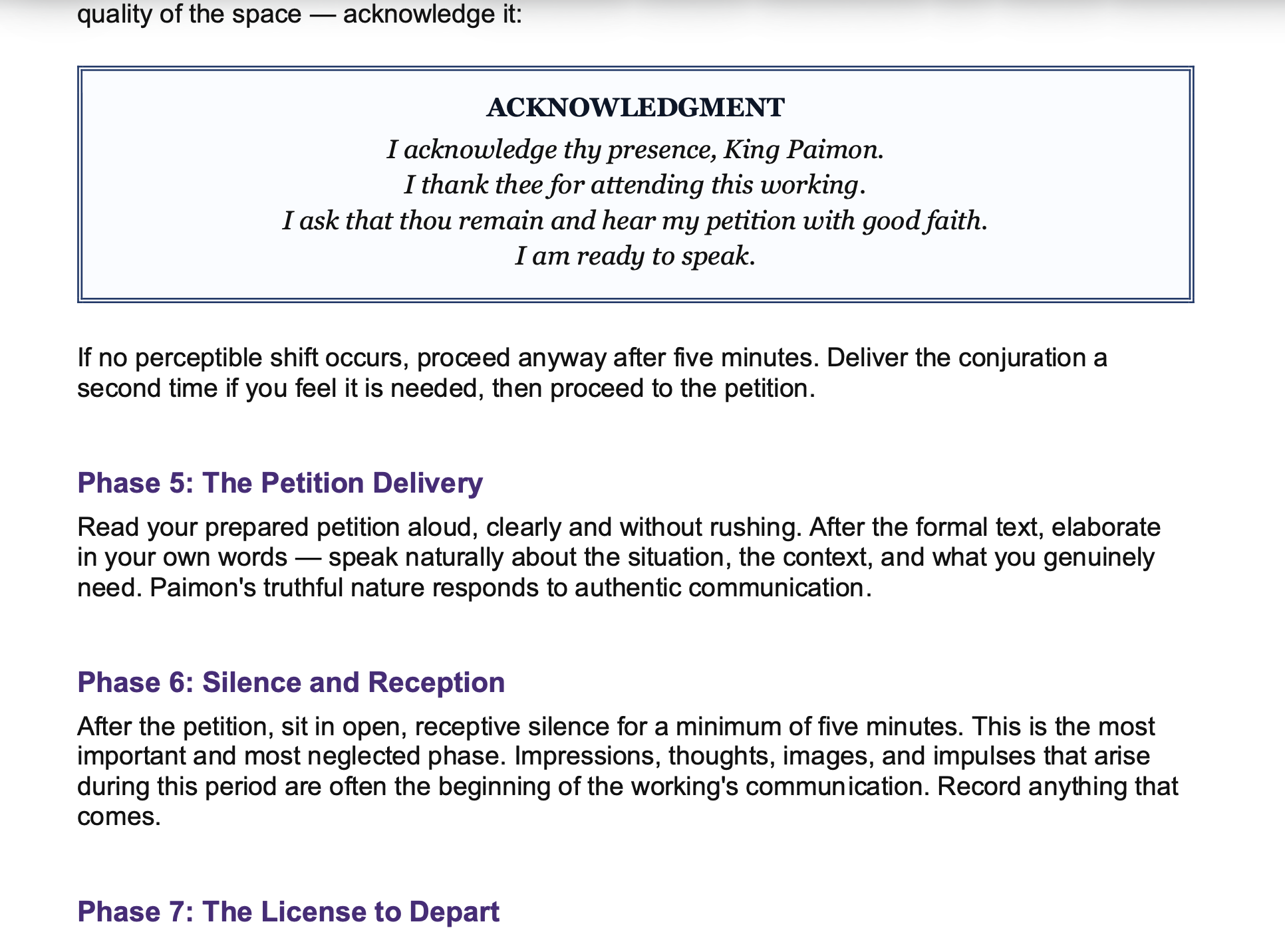
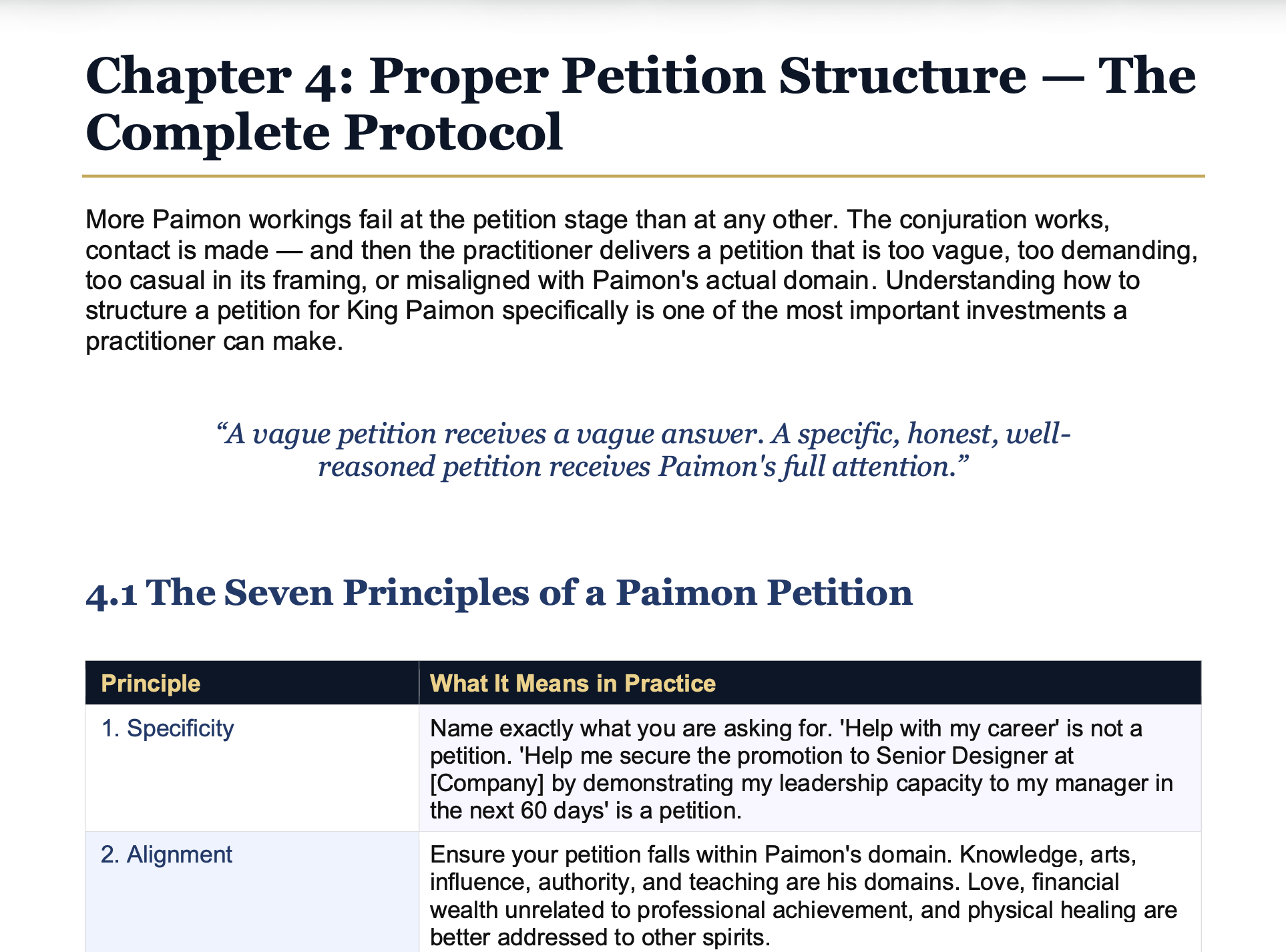
- Proper petition structure — the complete protocol. The seven principles of a Paimon petition in a reference table. Pre-petition preparation specific to Paimon. Full altar setup guide. The complete eight-phase working sequence with the musical greeting, conjuration, presence acknowledgment, silence period, and License to Depart — all in formatted ritual text. Written petition structure template.
- Reported experiences — what practitioners report. First contact experiences (scale, sound, temperature), three first-person practitioner accounts, communication patterns (direct impression, dreams, synchronicities, inner voice), result accounts across all three major domains, and physical presence experiences.
- Common mistakes — eight identified and corrected. Insufficient preparation, omitting the music, casual register, demanding rather than petitioning, vague petitions, obsessive repetition, misaligned domain, and broken commitments — each with diagnosis and specific correction.
- Practical workings — five complete templates. Creative breakthrough, academic mastery, professional authority and recognition, revealed truth, and monthly maintenance working — each with altar specifications, full ritual petition text, and guidance on interpreting results.
- Building a long-term relationship. What changes over time, five development practices, the deepening teaching relationship, signs of a healthy relationship, and what to do when the relationship goes quiet.
- Safety, ethics, and integration. Psychological boundaries, appropriate scope, the ethics of influence, and why integration — actually using what Paimon provides — is the most important and most neglected part of the practice.
The music protocol — what most guides miss entirely
The Ars Goetia specifies that King Paimon arrives preceded by a host of spirits playing trumpets, cymbals, and all kinds of musical instruments. Most guides mention this as a curiosity. This guide treats it as what it actually is: a non-negotiable element of Paimon protocol whose omission is the single most common cause of poor Paimon contact.
Practitioners who omit the musical offering from their Paimon workings consistently report thinner contact than those who include it. This guide explains exactly what the music offering is, how to perform it regardless of whether you play an instrument, and how to present recorded music as a genuine offering when live performance isn’t possible.
The reported experiences chapter
No chapter is more practically useful for a developing Paimon practitioner than the one documenting what actual contact looks and feels like. This guide compiles and categorizes the consistent patterns across practitioner accounts: the characteristic sense of scale at first contact, the sound phenomena that more practitioners report for Paimon than for any other Goetic spirit, the quality of dream communication that follows workings, and the synchronistic pattern of results in the days and weeks after.
Knowing what to expect — and how to recognize it when it arrives — is the difference between a practitioner who interprets their working correctly and one who dismisses genuine contact as imagination.
Who this is for
- Beginners approaching Paimon for the first time — this guide provides everything needed for a correct, safe, and productive first working.
- Practitioners whose Paimon workings have been inconsistent — the mistakes chapter and the petition diagnostic appendix will identify exactly what has been going wrong.
- Experienced practitioners who want the most thorough single reference on Paimon available in organized, practical form.
- Anyone working in the arts, creative fields, academia, or professional environments where Paimon’s specific domains of influence are directly relevant.
Product details
- Format: instant digital download (.PDF — fully print-ready)
- 38 pages, 9 chapters, 4 appendices
- 5 complete working templates with full ritual text
- Complete working record template and petition diagnostic
- Recommended study list for further development
- Yours to keep, print, and use at the altar forever